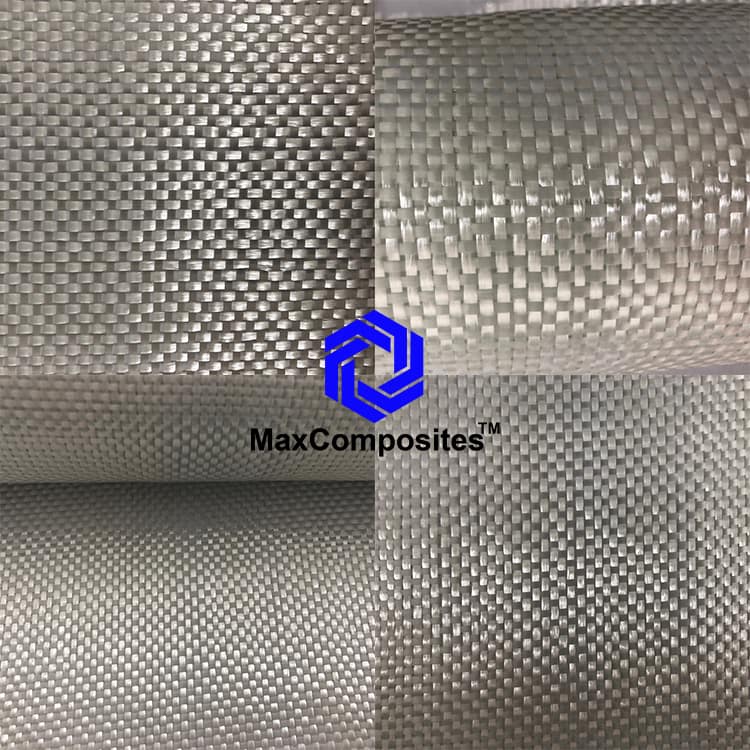
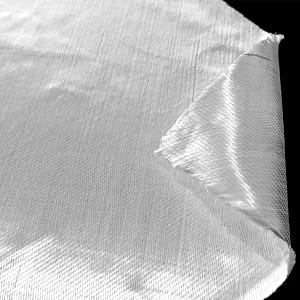
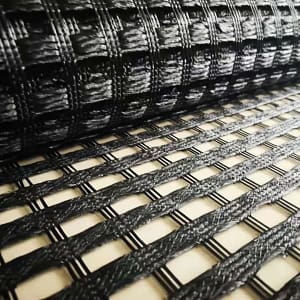
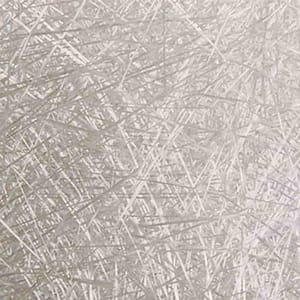
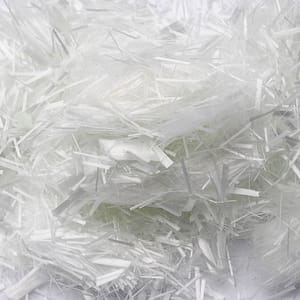
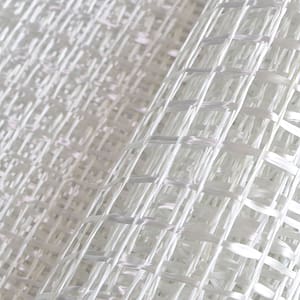
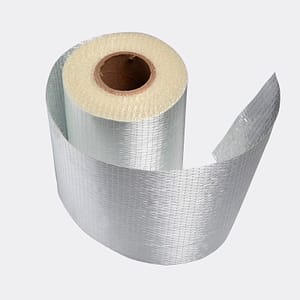
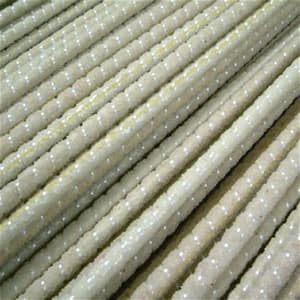
Woven Fiberglass Fabric is a high-performance industrial textile characterized by its biaxial reinforcement. By interlacing glass fiber yarns in a 0°/90° (warp and weft) orientation, it provides balanced strength and dimensional stability for composite manufacturing and structural applications.
1. Raw Material Performance
We utilize premium fiberglass yarns from world-renowned manufacturers like Jushi® to ensure consistent filament diameter and superior sizing chemistry.
Specialized Glass Types:
E-Glass (Electrical): The industry standard. Offers excellent electrical insulation and high mechanical strength.
C-Glass (Chemical): Specifically formulated to resist corrosive chemical environments and acids.
S-Glass (Structural): High-strength glass with approx. 30-40% higher tensile strength and higher modulus than E-glass.
AR-Glass (Alkali Resistant): Contains Zirconia (ZrO2) to resist high-pH environments like concrete.
A-Glass (Alkali): Standard “soda-lime” glass for general use.
2. Weaving Methodology: The Plain Weave
The Plain Weave is a fundamental pattern where warp and weft yarns cross over and under each other alternately.
Symmetry: Provides equal strength in both directions.
Stability: High interlacing density prevents fabric “skewing” or distortion.
Surface Finish: Results in a thin, flat profile, ideal for surfacing or lightweight structural layers.
3. Key Characteristics
High Strength-to-Weight Ratio: Significant reinforcement without excessive bulk.
Dimensional Stability: Minimal stretch or shrinkage under load.
Resin Compatibility: Optimized for Epoxy, Polyester, and Vinyl Ester systems.
Versatility: Available from 40gsm (lightweight) to 800gsm (heavy-duty).
4. Advanced Manufacturing: Vacuum Infusion Process (VIP)
Vacuum Infusion is a closed-mold technique where vacuum pressure is used to drive resin into the dry fiberglass stack. Plain weave fabrics are highly effective in VIP due to their predictable permeability.
Advantages for Plain Weave:
Higher Fiber Volume Fraction: Vacuum pressure compresses the fabric layers, achieving a higher glass-to-resin ratio compared to hand lay-up.
Consistent Quality: Eliminates human error in resin application, resulting in zero-void laminates.
Safety: The closed-bag system significantly reduces VOC (Volatile Organic Compound) emissions.
VIP Implementation Steps:
Dry Lay-up: Arrange the dry plain weave fabric layers in the mold.
Consumables: Apply peel ply, infusion mesh (flow media), and vacuum bagging film.
Vacuum Seal: Use sealant tape to create an airtight seal and pull a full vacuum.
Resin Introduction: Open the resin feed line. The vacuum draws the resin through the fabric. The plain weave’s uniform gaps ensure a steady, even “flow front.”
Curing: The part cures under constant pressure, ensuring maximum consolidation.
5. Standard Operating Steps (Hand Lay-up)
Preparation: Clean the mold and apply a release agent.
Cutting: Pre-cut the fabric to size, avoiding frayed edges.
Wetting Out: Apply resin to the substrate, lay the fabric, and add resin on top until transparent.
Consolidation: Use a finned roller to remove all trapped air bubbles.
Curing: Allow the laminate to harden in a dust-free environment.
6. Crucial Precautions
Air Entrapment: White spots indicate “dry spots.” These must be rolled out before the resin gels.
Moisture Control: Store fiberglass in a cool, dry place; moisture prevents proper resin bonding.
Health & Safety: Glass fibers cause skin and respiratory irritation. Always wear PPE (gloves, goggles, and a dust mask).
Resin-Rich Areas: Avoid excessive resin in corners. In VIP, ensure proper placement of flow media to prevent resin “pooling.”